
Hedge Plant Calculator: How Many Hedging Plants Do I Need?
Work out how many hedging plants to buy for a single row or a double staggered row. Enter the length of the hedge line and the spacing your nursery recommends, and the calculator shows how it counts each row. The calculation runs in your browser; nothing you type is sent anywhere.
Worked example (example figures only): a 10 m hedge, single row, plants every 50 cm: a plant at each end plus one every 0.5 m = 10 ÷ 0.5 + 1 = 21 plants. As a double staggered row, the second row starts 25 cm in: (10 − 0.25) ÷ 0.5 = 19.5 → 19 + 1 = 20 plants, so 41 in total.
Affiliate links: As an Amazon Associate I earn from qualifying purchases. It costs you nothing extra.
Prefer to order online?
Your local garden centre is the best place to compare in person. If you would rather have it delivered:


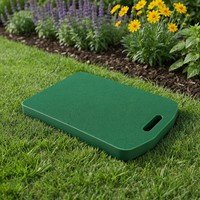
Images are AI-generated illustrations, not photos of the exact product. Check the product, price and availability on Amazon.
How the calculation works
- A plant goes at each end of the line, then one at every spacing in between.
- In a staggered double row, the second row starts half a spacing in, so the plants sit in the gaps of the first row.
- Spare plants are optional, start at zero, and are shown separately.
What this tool does not do
- It does not recommend a spacing — that depends on the species and plant size, so use your nursery’s figure.
- If one end meets an existing plant, wall or post, you may need one fewer per row.
A practical guide to planning a new hedge
A hedge is one of the longest-lasting things you can plant, so it is worth getting the numbers right before you order. The calculator above counts plants for the length and spacing you choose; this guide explains how to set out the line, how the counting works and what to ask your nursery.
Single row or double row?
A single row uses fewer plants. A double staggered row — two lines with the plants in the second row sitting in the gaps of the first — is often used where a thicker hedge is wanted. Which suits your site depends on the species, the space and how dense you want the hedge to be. Your nursery can advise for the plants you are buying.
Spacing is species-specific
Different hedging plants are planted at different spacings, and the size of the plant you buy matters too. That is why the calculator asks you for the spacing rather than assuming one. Use the figure your nursery or supplier gives for that species and size.

How the counting works
The calculator places a plant at each end of the line and one at every spacing in between. In a double staggered row, the second row starts half a spacing in. If your hedge meets an existing plant, a wall or a fence post at one end, you may need one fewer plant per row — the working shows exactly how the total was reached so you can adjust it.
Spares
Some people order a few extra plants in case any fail. The calculator lets you add a percentage, starting at zero, and shows those spares separately so they are never mixed into the main count.
Setting out on the ground
- Run a string line along the route before you dig.
- Mark the plant positions with canes so you can check the spacing before planting.
- Measure the actual length on site rather than from a plan — boundaries are often longer than they look.

Common questions
Bare-root or potted plants?
Both are used for hedging and suit different seasons and budgets. Your nursery can advise what is available and when to plant.
How long can the hedge be?
Any length. Enter the full length in metres; for a hedge with corners, add the straight sections together.
Why is my total one more than length divided by spacing?
Because the count starts with a plant at one end and adds one at every spacing. When the length divides exactly by the spacing, that puts a plant at both ends: a 10 m line with a plant every metre has 11 plants, not 10. When it does not divide exactly, the leftover length (shorter than one gap) is left at the far end; add one more plant if you want a plant right at the end.
Where can I buy hedging?
Many garden centres and nurseries sell hedging, especially in the bare-root season. Find one near you.
Related
More garden calculators
- Mulch calculator
- Grass seed calculator
- Turf calculator
- Gravel calculator
- Topsoil calculator
- Raised bed soil calculator
- Bulb planting calculator
- Lawn feed calculator
We are not horticulturists and do not claim to be. This page does one narrow job — arithmetic — shows its working, and leaves the product-specific figures to you and your supplier. If you find an error, tell us and we will correct it and say so.
Choosing what to plant? Our hedging guides cover photinia ‘Red Robin’ and cherry vs Portuguese laurel.