
Topsoil Calculator: How Much Topsoil Do I Need?
Work out how much topsoil you need to raise or level a bed, border or lawn area. The calculator gives the volume in cubic metres and litres, and the weight and bag count if you enter your supplier’s figures. The calculation runs in your browser; nothing you type is sent anywhere.
Worked example (example figures only): a 6 m × 3 m bed = 18 m². Adding 10 cm: 18 × 0.1 = 1.8 m³ = 1,800 litres. In 40-litre bags: 1,800 ÷ 40 = 45 bags. Only if the supplier sells by weight do you need a density; use theirs.
Affiliate links: As an Amazon Associate I earn from qualifying purchases. It costs you nothing extra.
Prefer to order online?
Your local garden centre is the best place to compare in person. If you would rather have it delivered:

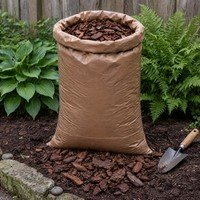

Images are AI-generated illustrations, not photos of the exact product. Check the product, price and availability on Amazon.
How the calculation works
- Net area (added shapes minus anything left out) × depth = volume.
- 1 m³ = 1,000 litres.
- Tonnes are only shown when you enter a density.
- Bags sold by litres are counted from the volume; bags sold by weight need the density. Bags are rounded up only at the end.
What this tool does not do
- It adds no allowance for settling — loose soil usually sinks a little after spreading and watering.
- It does not assume a density; topsoil varies a lot with moisture and texture.
A practical guide to buying topsoil
Topsoil is bought for new lawns, new beds, levelling dips and filling raised beds. It is bulky and heavy, so getting the quantity right saves both money and back-breaking trips. The calculator above does the sums; this guide covers the choices around them.

Measuring the area
Measure the area you are covering and split irregular shapes into rectangles, circles and triangles. If part of the area is already at the right level — around a path or an existing bed edge, for example — leave it out rather than averaging it in.
Choosing a depth
The depth depends on the job: a thin layer to level a lawn is a very different order from filling a new bed. Decide what you are trying to achieve first, then check with your supplier or a guide for that specific job. If the depth varies across the area, it is more accurate to measure sections separately than to guess an average.
Volume, weight and bags
Topsoil can be sold by volume (litres or cubic metres) or by weight (tonnes or kilograms). The calculator always gives the volume, because that is what your area needs. It only works out a weight if you give it your supplier’s density, because soil weight changes a lot with moisture and texture. Check which way your supplier sells before comparing prices.

Settling
Loose topsoil usually settles after it is spread, walked on and watered, so the finished level can end up lower than the depth you spread. Some people firm it gently as they go or plan to top up later. The calculator does not add an allowance, so you can decide for yourself.
Quality and what to ask
- Ask what the soil is intended for — general landscaping, lawns or planting.
- Ask whether it has been screened to remove stones and debris.
- If you can, look at it before a large delivery.
Common questions
How many bags are in a cubic metre?
One cubic metre is 1,000 litres, so divide 1,000 by the bag size in litres. The calculator does this for you when you enter the bag size.
Is topsoil the same as compost?
No. They are different materials used for different jobs. For filling raised beds with a mix of both, use the raised bed soil calculator.
Can I use this for a new lawn?
Yes, for the soil. For seed or turf, use the grass seed calculator or the turf calculator.
Why is my weight figure different from my supplier’s?
Different densities give different weights. Use the figure your supplier quotes for their product.
Related
More garden calculators
- Mulch calculator
- Grass seed calculator
- Turf calculator
- Gravel calculator
- Raised bed soil calculator
- Hedge plant calculator
- Bulb planting calculator
- Lawn feed calculator
We are not horticulturists and do not claim to be. This page does one narrow job — arithmetic — shows its working, and leaves the product-specific figures to you and your supplier. If you find an error, tell us and we will correct it and say so.