
Raised Bed Soil Calculator: How Much Soil and Compost to Fill a Raised Bed
Work out how much soil, compost or mix you need to fill one or more raised beds. Use the inside measurements and the depth you will actually fill, take off anything already in the bed, and optionally split the total into your own mix. The calculation runs in your browser; nothing you type is sent anywhere.
Worked example (example figures only): two beds measuring 2.4 m × 1.2 m inside, filled to 30 cm: 2.4 × 1.2 × 0.3 = 0.864 m³ each, so 1,728 litres for both. With a 60% / 40% mix that is 1,036.8 L and 691.2 L. In 50-litre bags: 21 bags and 14 bags.
Affiliate links: As an Amazon Associate I earn from qualifying purchases. It costs you nothing extra.
Prefer to order online?
Your local garden centre is the best place to compare in person. If you would rather have it delivered:


Images are AI-generated illustrations, not photos of the exact product. Check the product, price and availability on Amazon.
How the calculation works
- Volume of one bed = internal length × internal width × fill depth.
- Multiply by the number of identical beds, then subtract anything already in them.
- If you enter a mix, the shares must add up to exactly 100%.
- Bags are rounded up only at the end, separately for each material.
What this tool does not do
- There is no recommended mix — that depends on what you grow.
- No allowance is added for the bed settling over the first season.
A practical guide to filling raised beds
Raised beds hold more material than most people expect, and filling them is often the biggest cost of the project. The calculator above works out the volume from the inside measurements; this guide explains how to measure, how to think about the mix and how to buy.
Measure the inside, not the outside
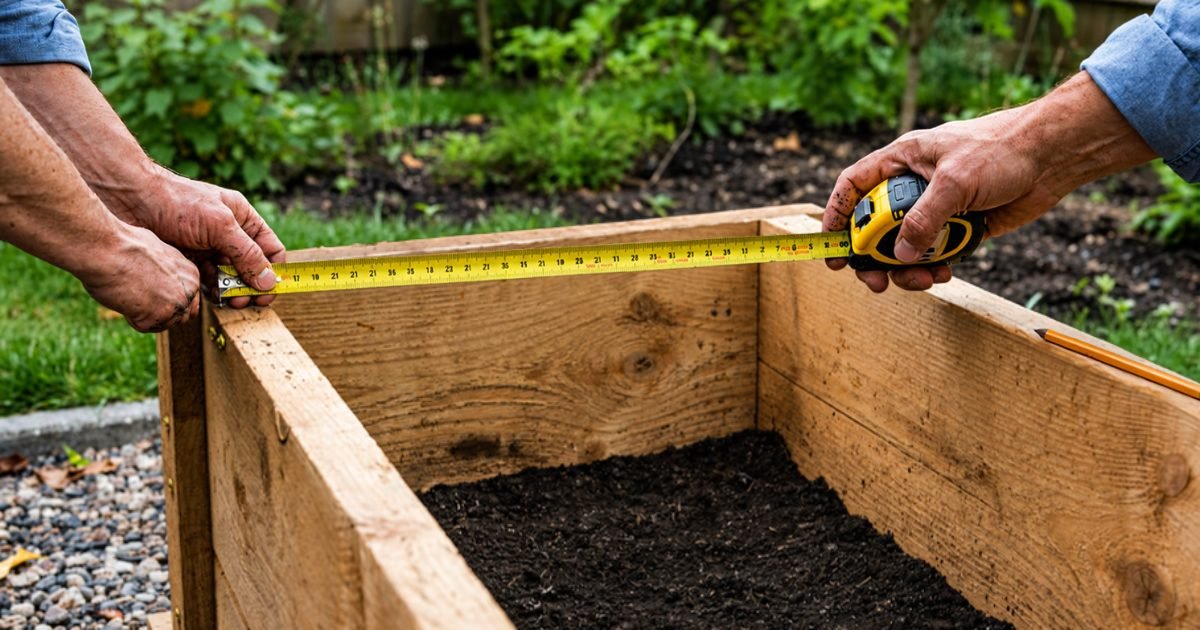
The boards or sleepers take up space, so the outside size of a bed overstates the volume you need to fill. Measure inside the boards. Then decide how deep you will actually fill — many people leave a gap below the top edge — and use that depth, not the full height of the sides.
Deduct what is already there
If the bed already has soil in it, or you are putting other material in the base, enter that as “already filled” so you do not buy too much. If you are not sure of the volume, measure the depth of what is there and work it out the same way.
Choosing a mix
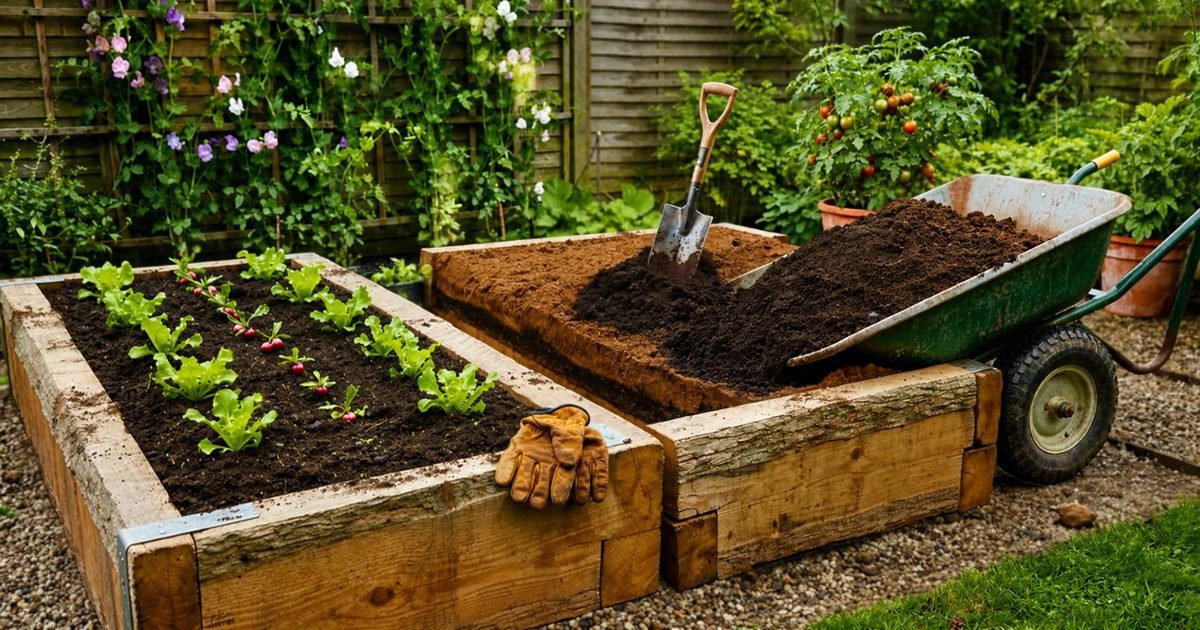
There is no single correct recipe. What works depends on what you grow and what you can get locally. The calculator lets you enter your own mix — for example, a share of topsoil and a share of compost — as long as the percentages add up to 100%. It then shows how much of each material you need and, if you enter a bag size, how many bags of each.
If you are unsure, ask at your garden centre. Staff can usually tell you what people locally use for vegetables, flowers or fruit.
Settling and topping up
New beds often sink a little as the material settles and breaks down. Many gardeners top up in later seasons. The calculator gives the volume for the depth you entered and adds nothing on top.
What this page does not cover
This is about filling volume, not building the bed. Height, board thickness, fixings and whether a tall bed needs extra support are structural questions — follow the kit instructions or ask a builder.
Common questions
How many bags will I need?
Enter your bag size in litres and the calculator divides the total by it, rounding up only at the end.
Why do the per-material bag counts add up to more than the total?
Each material is rounded up separately, so you may end up with part-bags of more than one material.
Can I calculate several beds at once?
Yes, if they are the same size. For beds of different sizes, run the calculator for each and add the results.
Do I need topsoil, compost or both?
That depends on what you grow. The topsoil calculator and the mulch and compost calculator help with single materials.
Related
More garden calculators
- Mulch calculator
- Grass seed calculator
- Turf calculator
- Gravel calculator
- Topsoil calculator
- Hedge plant calculator
- Bulb planting calculator
- Lawn feed calculator
We are not horticulturists and do not claim to be. This page does one narrow job — arithmetic — shows its working, and leaves the product-specific figures to you and your supplier. If you find an error, tell us and we will correct it and say so.