
Laurel Leaves Yellow, Brown or Full of Holes? Causes and Fixes
Holes and spots
According to the RHS, three diseases cause most spotting and holes on laurel:
| Disease | What you see | Notes |
|---|---|---|
| Powdery mildew | Dead patches that drop out, leaving holes and ragged edges; sometimes a white powdery growth underneath | Often mistaken for insect damage (RHS) |
| Fungal leaf spot | Brown spots whose centres fall out (“shot-hole”) | Plants usually grow through it |
| Bacterial shot-hole | Small water-soaked spots, sometimes with pale halos, then holes | AHDB identifies the cause as Pseudomonas syringae pv. syringae |
The RHS puts cultural control first. It notes there is no specific information on how well home-garden fungicides work against the fungal leaf spots of laurel, and that no products available to home gardeners act against bacterial shothole. Cut out the worst-affected growth in dry weather, clear up fallen leaves, avoid overhead watering, and let new growth replace the damaged leaves. Hard pruning to remove every marked leaf is unnecessary.
Notches in the leaf edges
Irregular notches bitten from the leaf edges are the work of adult vine weevils, which feed at night. The leaf damage is cosmetic; the grubs, which eat roots, are the bigger problem, especially for laurel in pots. See the RHS guide to leaf damage on woody plants.
Yellow leaves
Wet or compacted soil
The RHS says waterlogged soil is a common cause of failure in evergreen prunus. Nurseries such as Grasslands also put waterlogging and compaction at the top of their list for yellowing laurel. Look for standing water after rain or a hedge planted into heavy, trodden ground. Improving drainage is the real fix; feeding will not help roots that are short of air.
Nutrient shortage
Nursery guidance suggests two patterns. If the whole hedge is evenly pale yellow-green on well-drained soil, a general shortage of nitrogen is likely; a balanced feed and mulch in spring helps. If the leaves yellow between veins that stay green, iron shortage is the likely cause, often on chalky soils. Test the soil pH before treating.
Old leaves dropping
Like most evergreens, laurel sheds some older leaves. A scatter of yellow leaves inside the hedge, with healthy outer growth, is normal.
Brown leaves
Crisp brown leaves on the sunny or windward side usually mean drought stress or wind and frost scorch; the RHS notes that long droughts can scorch laurel leaves on sunny or exposed sites. New plants are most at risk, so water deeply in dry spells during the first summers.
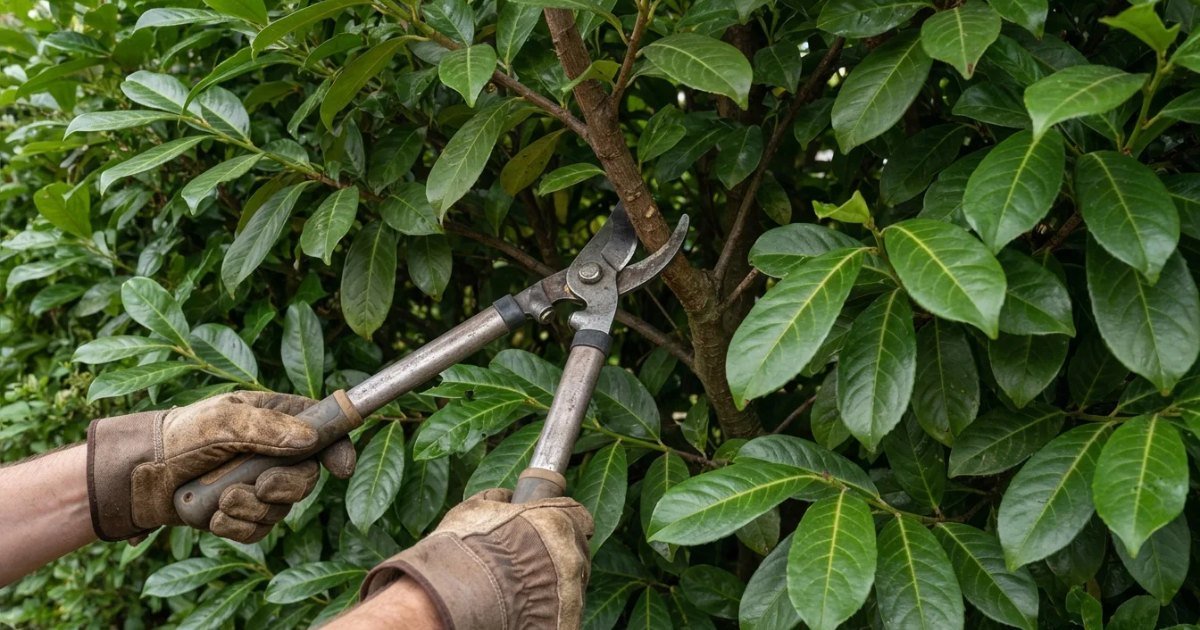
Leaves with brown, ragged edges straight after trimming have been cut by the hedge trimmer. The RHS recommends secateurs or loppers for large-leaved hedges, cutting stems inside the canopy.
Getting the hedge back
- Check the soil first: drainage, compaction and moisture.
- Clear fallen and badly affected leaves in dry weather.
- Water at the base, not over the leaves.
- Feed and mulch in spring if the soil is poor.
- Judge recovery by the new growth over a season.
For growing advice by species, see our cherry laurel and Portuguese laurel guides.
🌱 Why does my laurel have holes in the leaves?
Usually leaf diseases such as powdery mildew, fungal leaf spot or bacterial shot-hole, whose dead patches drop out (RHS). Notches in the edges are vine weevil.
🌱 Why are my laurel leaves turning yellow?
Most often waterlogged or compacted soil. Even pale yellow suggests low nitrogen; yellow between green veins suggests iron shortage, often on chalk.
🌱 Why are my laurel leaves going brown?
Drought, cold wind or frost scorch on exposed sides, or cut edges left by a hedge trimmer.
🌱 Should I spray my laurel with fungicide?
The RHS puts cultural control first: there is no specific evidence that home-garden fungicides work on laurel leaf spots, and none act against bacterial shothole. Improve conditions and let new growth take over.
🌱 Will my laurel hedge recover?
Usually, yes. Damaged leaves stay marked, but laurel regrows strongly once the cause is fixed.
More laurel guides
Sources: RHS: Laurel leaf diseases · RHS: Evergreen prunus · RHS: Leaf damage on woody plants · RHS: Pruning hedges · AHDB: Bacterial shot-hole of cherry laurel · Grasslands Nursery