
Photinia Varieties Compared: Red Robin, Little Red Robin and More
What counts as a photinia variety?
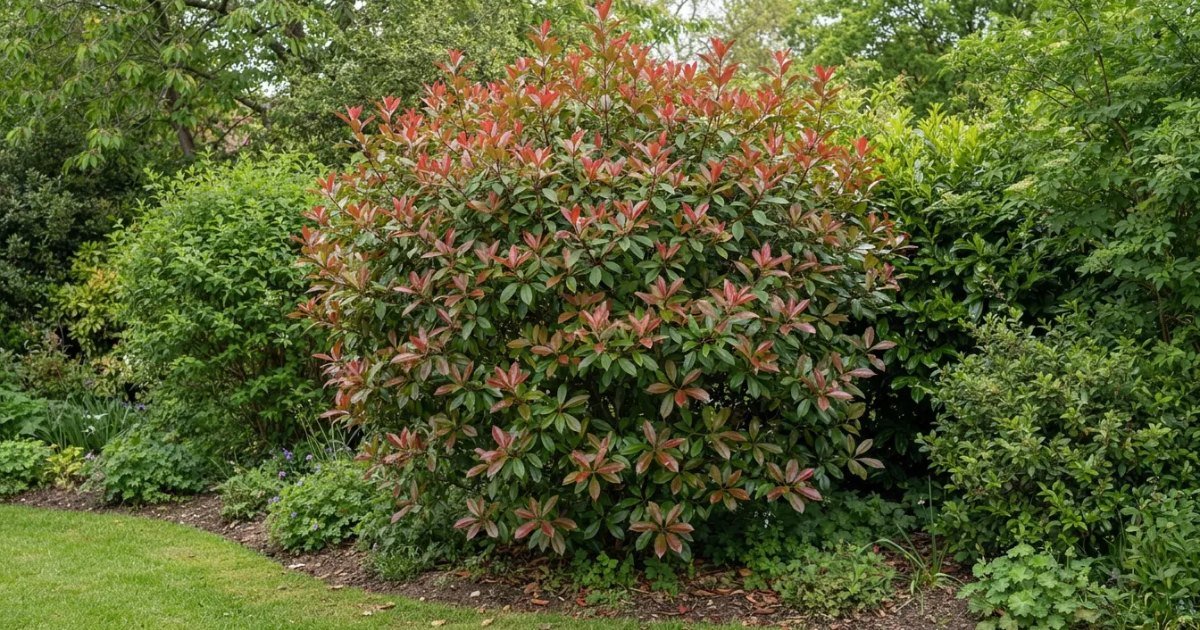
Most photinias sold in the UK are cultivars of Photinia × fraseri, a garden hybrid. The RHS says ‘Red Robin’ is the most popular, and that a few other species and cultivars turn up mainly at specialist tree and shrub nurseries. Some species are evergreen and others deciduous, and some need neutral or acid soil.
Names on labels are not always consistent, and published sizes for the newer cultivars vary between nurseries. Where a figure comes only from a nursery, we mark it as indicative.
Photinia × fraseri cultivars
| Cultivar | Leaves | Typical size | Best use | Source |
|---|---|---|---|---|
| ‘Red Robin’ | Glossy green, bright red when young | Large; the RHS lists an eventual height of several metres. Up to about 30 cm growth a year (RHS) | Hedges, screens, specimen shrub | RHS: Award of Garden Merit; hardiness rating H5 |
| ‘Little Red Robin’ | As ‘Red Robin’, smaller | About 1–1.5 m | Pots, small gardens, low hedges | RHS |
| ‘Red Robin Variegated’ | Green with cream variegation, red-tinged new growth | Not stated in our sources | Borders | RHS plant record |
| ‘Carré Rouge’ | Deep red young leaves | About 2–3 m (indicative: nursery figures differ, and size depends on conditions and pruning) | Hedges, borders | Nursery guide |
| ‘Louise’ | Variegated, cream margins, pink-red young growth | About 1.75 m (indicative, one nursery guide; varies with conditions) | Borders, specimen | Nursery guide |
| ‘Pink Marble’ | Young leaves marbled pink, maturing green and cream | Not stated in our sources | Borders, pots | Nursery guide |

Red Robin vs Little Red Robin
This is the comparison most buyers face. ‘Red Robin’ grows fast and big, which is what you want for a 1.8 m screen. ‘Little Red Robin’ has the same look on a smaller frame, about 1–1.5 m (RHS), so it suits pots, front gardens and low hedges with far less cutting. Planted as a tall screen, ‘Little Red Robin’ will disappoint. Planted in a small pot, ‘Red Robin’ will need constant pruning.
Other photinia species
These are less common and usually found at specialist nurseries. The RHS notes that several dislike chalky or alkaline soil.
| Species | Evergreen or deciduous | Notes from the RHS |
|---|---|---|
| P. serratifolia ‘Pink Crispy’ | Evergreen | Bright pink young leaves, later marbled light and dark green; white flowers, small red fruits |
| P. davidiana | Evergreen | White spring flowers, red berries; dislikes chalky soil; occasionally affected by fireblight |
| P. beauverdiana | Deciduous tree | Red autumn foliage, white flowers, red berries; dislikes chalky soil |
| P. villosa | Deciduous small tree | White early-summer flowers, red fruit, red-orange autumn colour; dislikes chalky soil |
How to choose
- Tall hedge or screen: ‘Red Robin’. See planting a photinia hedge.
- Pot or small garden: ‘Little Red Robin’. See photinia in pots.
- Colourful border shrub: a variegated or pink-leaved form such as ‘Louise’, ‘Pink Marble’ or ‘Pink Crispy’.
- Chalky soil: stick with P. × fraseri cultivars and avoid species the RHS says need neutral or acid soil.
- Cold or exposed garden: any photinia needs shelter. Consider a sunny wall, or a tougher hedge such as laurel.
🌱 What is the best photinia for a hedge?
‘Red Robin’. It is vigorous, evergreen and holds the RHS Award of Garden Merit.
🌱 Which photinia stays small?
‘Little Red Robin’, which the RHS describes as compact, to about 1–1.5 m.
🌱 Is there a variegated photinia?
Yes. ‘Louise’ and ‘Red Robin Variegated’ have cream-variegated leaves, and ‘Pink Marble’ and ‘Pink Crispy’ have pink-marbled young leaves.
🌱 Do all photinias grow on chalk?
No. ‘Red Robin’ copes with most soils, but the RHS says species such as P. beauverdiana and P. villosa need neutral or acid soil.
🌱 Is ‘Carré Rouge’ better than ‘Red Robin’?
It is sold for deeper red young leaves on a somewhat smaller plant, but published sizes vary and it has not been through the RHS assessment that gave ‘Red Robin’ its award, so treat claims as indicative.
More photinia guides
Sources: RHS: How to grow photinia · RHS: ‘Red Robin’ · RHS: ‘Little Red Robin’ · RHS: ‘Red Robin Variegated’ · Promesse de Fleurs: choosing a photinia (indicative sizes) · Gardeners’ World